













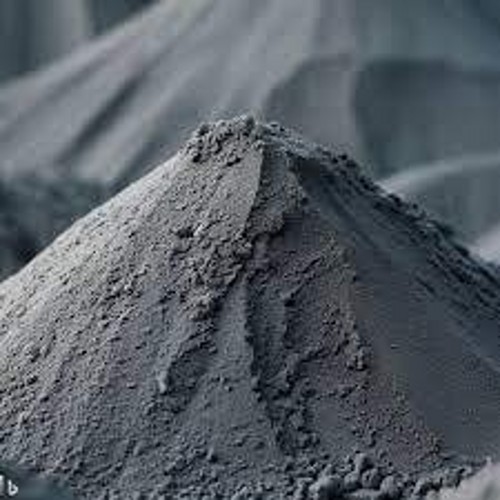
Ordinary Portland Cement (OPC)
 natural marble
cement
Agricultural and Food
Fashion
Industrial
Recycling
Cosmetics
natural marble
cement
Agricultural and Food
Fashion
Industrial
Recycling
Cosmetics
Shipping & Returns
Find retail locations
For orders above €100
For All Your Questions
Hand MadeMinimalismElectronicsCars
Products variations colors and images without any additional plugins.
Ordinary Portland Cement (OPC) is the most common and widely used type of cement in the construction industry. It is a hydraulic cement, meaning it sets and hardens when mixed with water due to chemical reactions (hydration).
OPC is primarily composed of clinker (a mixture of calcium silicates produced from limestone and clay) and a small amount of gypsum (to control the setting time).
| Component | Typical Percentage | Function |
|---|---|---|
| Clinker (CaO·SiO₂, CaO·Al₂O₃, CaO·Fe₂O₃) | 90–95% | Provides strength through hydration |
| Gypsum (CaSO₄·2H₂O) | 3–5% | Controls setting time |
| Compound | Symbol | Typical Range (%) |
|---|---|---|
| Tricalcium Silicate | C₃S | 45–60 |
| Dicalcium Silicate | C₂S | 15–30 |
| Tricalcium Aluminate | C₃A | 6–12 |
| Tetracalcium Aluminoferrite | C₄AF | 6–10 |
| Property | Typical Value |
|---|---|
| Specific Gravity | 3.10 – 3.15 |
| Fineness (Blaine) | 280–320 m²/kg |
| Initial Setting Time | ≥ 30 minutes |
| Final Setting Time | ≤ 600 minutes |
| Compressive Strength (28 days) | 42.5–62.5 MPa depending on grade |
OPC 32.5 N/R – for general concrete and plastering.
OPC 42.5 N/R – for reinforced concrete structures.
OPC 52.5 N/R – for high-strength and industrial structures.
Building foundations, beams, slabs, columns.
Bridges, tunnels, and dams.
Precast concrete products.
Roads and runways.
High early and ultimate strength.
Excellent bonding with aggregates.
Suitable for all general-purpose concrete work.
Readily available and economical.
| Form | Common Sizes |
|---|---|
| Bags | 25 kg / 50 kg |
| Bulk | 1–1.5 MT jumbo bags or bulk vessel shipments |
Store in a dry, moisture-free area on raised wooden pallets, covered with waterproof sheeting, to prevent lump formation and loss of strength.
ه
No account yet?
Create an AccountWill be used in accordance with our Privacy Policy
