













Shower trays
What Is a Shower Tray?
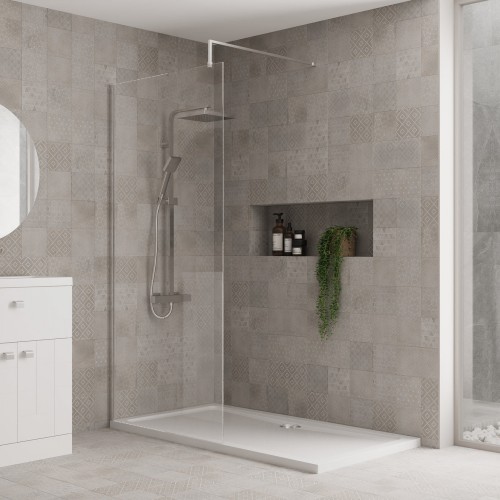
A shower tray is the floor part of a shower enclosure that collects the water from the shower head and channels it to a drain. It’s a waterproof base that helps prevent water from leaking out into the rest of the bathroom. ManoMano+2Bathrooms+2
Key Characteristics & Factors to Consider
1. Materials
Different shower trays are made from different materials. Each has pros and cons:
Acrylic / Acrylic-capped ABS
Lightweight and easy to handle. Sanctuary Bathrooms+1
Feels warmer underfoot. Sanctuary Bathrooms
But can scratch more easily and needs solid support. DIY Doctor+1
Stone Resin
Very durable, solid feel. DIY Doctor
Often has a gel-coat finish for scratch resistance and easy cleaning. Tap Warehouse+1
Heavier than acrylic; may need strong support. Victorian Plumbing+1
Ceramic / Porcelain
Very rigid and long-lasting. DIY Doctor
But heavy and can feel cold. Sanctuary Bathrooms
Steel (Enamelled)
Durable and impact-resistant. Sanctuary Bathrooms
But can be noisy and may show water marks. Sanctuary Bathrooms
2. Shapes and Types
Shower trays come in various shapes and styles depending on the bathroom layout:
Rectangular — Classic, good for large or walk-in showers. Victorian Plumbing
Square — Flexible option, works well with different enclosures. MX Group+1
Quadrant — Rounded front, ideal for corners; space-efficient. Drench
Offset Quadrant — A rectangle with one curved edge to maximize space. SENSTEC Anti-Slip Shower Trays
Pentagon / Custom — For very specific layouts. MX Group
Walk-in / Wet-Room Base — Very low or flush trays, often used for barrier-free or wet-room designs. ManoMano
3. Drain / Waste Position
The position of the drain (waste) is key; some trays have center drains, others corner or offset. DIY Doctor
Must match or be compatible with your plumbing layout. Tap Warehouse+1
Installation notes: the tray must have the proper slope (“fall”) toward the drain so that water flows correctly. HeatandPlumb
4. Profile / Height
Low-profile / Slimline trays: Very thin (~25-40 mm), good for minimal steps in and modern design. Tap Warehouse
Raised trays (with riser kits): Easier access to plumbing underneath. ManoMano
5. Slip Resistance
Many shower trays have anti-slip surfaces or textured finishes. Tap Warehouse
Some especially safe models are graded for anti-slip (check the spec sheet). Flair Showers
6. Installation & Maintenance
The tray needs firm, level support underneath. HeatandPlumb
Seal the joint between the tray and walls (usually with silicone) properly to avoid leaks. Plumbworld
Cleaning: avoid very abrasive cleaners, especially for acrylic or gel-coated trays. HeatandPlumb
Examples of Shower Trays
Here are some real-life examples to illustrate different types:
Twyford Quadrant 800×800 mm Stone Resin Tray — 40 mm high, ABS reinforced, ideal for corners. Ideal Bathrooms
Laufen Quadrant Ceramic Tray (55 mm) — Sanitary ceramic, anti-slip, curved corner. Laufen
Laufen Quadrant Acrylic Tray (45 mm) — Lightweight, slim design. Laufen
Roman Stone Resin Anti-Slip Quadrant Tray — 40 mm, gel-coat finish, very durable. Bathrooms at Source
How to Choose the Right Shower Tray
Measure your space — Know your shower corner, length, and waste location. Asturias Bathrooms
Decide on the shape — Based on bathroom layout (corner, walk-in, etc.).
Pick the material — Balance weight, durability, and aesthetics.
Think about installation — Do you need a low tray, or can you raise it?
Consider safety — If slip resistance is important, choose a tray with textured or anti-slip finish.
Check drainage compatibility — Make sure the tray’s drain aligns with your plumbing.